There’s a common misconception that premium, luxury-feeling branding requires a premium, luxury-sized budget. In reality, some of the most effective luxury design principles have very little to do with how much money is spent, and much more to do with precision, restraint, and knowing which small details actually move the needle on perceived quality. For startups and small businesses operating with real budget constraints, that distinction matters a great deal.
You Don’t Need a Big Budget to Look Premium
Perceived quality and actual production cost are more loosely correlated than most people assume. A cluttered, expensive design can easily read as less premium than a simple, well-executed one, because perceived quality tends to come from coherence and intentionality rather than raw spend. This is genuinely good news for businesses without large design budgets, since it means the path to a premium-feeling brand identity doesn’t necessarily run through expensive materials or elaborate production.
What matters more is identifying the small number of details that carry disproportionate weight in shaping perception, and investing available budget specifically there, rather than spreading resources thin across every possible touchpoint. A business that gets a handful of high-visibility details right will generally read as more premium than one that spends the same total budget spread evenly across everything, with nothing executed particularly well.
High-Impact, Low-Cost Design Details
Certain design choices consistently deliver outsized perceived value relative to their actual cost. Typography is one of the most underrated levers here, a well-chosen, well-spaced typeface costs no more than a poorly chosen one, but makes a significant difference in how polished a design feels. Consistent, disciplined use of white space similarly costs nothing extra but dramatically affects whether a design feels considered or cluttered.
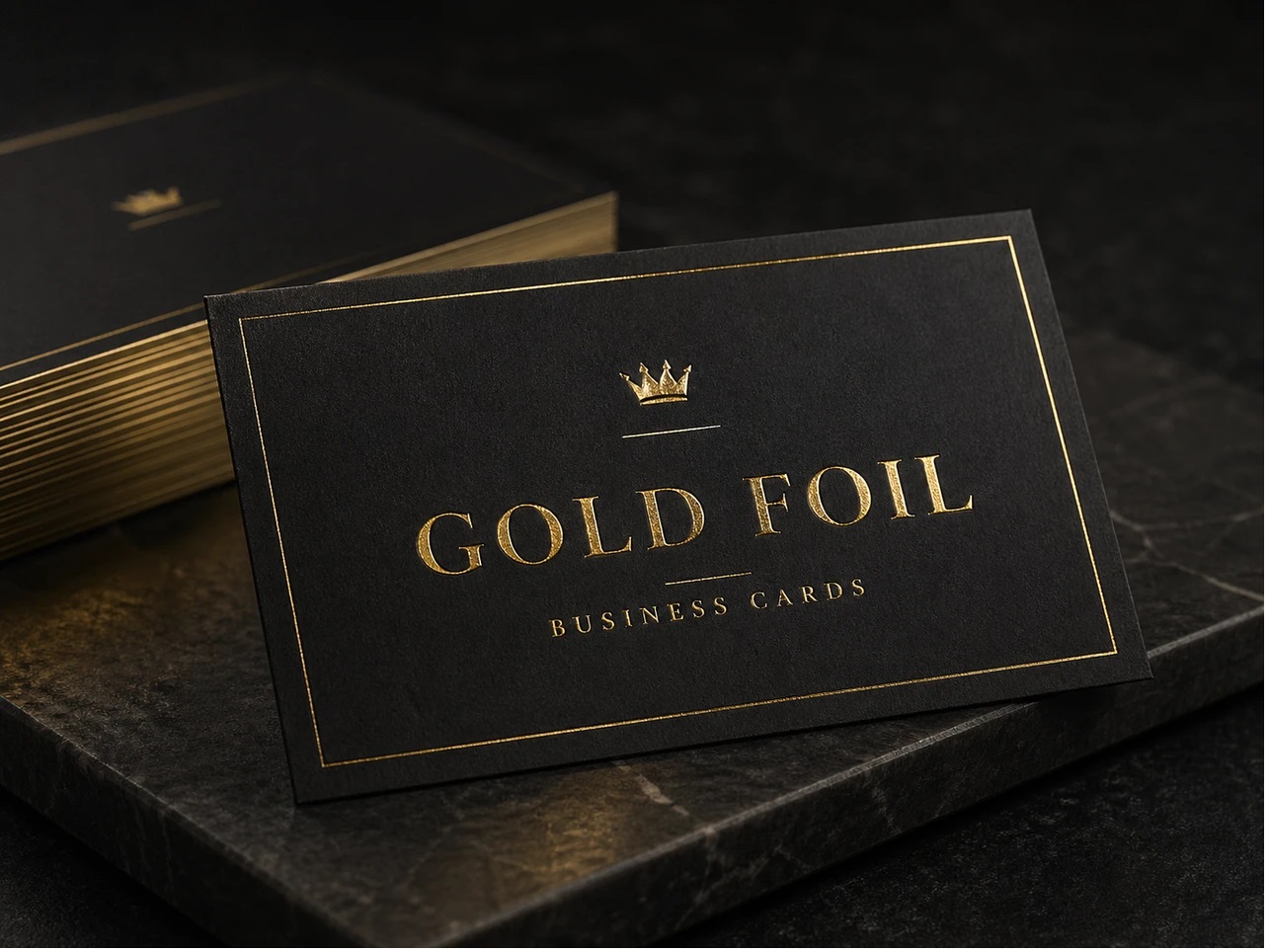
On the physical materials side, targeted upgrades often deliver better returns than comprehensive overhauls. A single premium finishing detail, applied precisely, can elevate an otherwise modest design considerably. Options like gold lettering business cards demonstrate this well, using one focused, high-impact detail, a precise gold accent, rather than an expensive overhaul of every material and design element, to meaningfully shift the overall perception of quality.
Where to Splurge vs. Where to Save
Not every element of a brand identity deserves equal investment, and part of building luxury branding on a budget is being strategic about where limited resources actually go. Elements with high visibility and frequent use, a business card, a primary logo mark, key packaging, tend to justify a larger proportional investment, since they’re the touchpoints most likely to shape overall brand perception across many interactions.
Lower-visibility or infrequently used materials can often get by with more modest execution without meaningfully affecting overall brand perception. Being deliberate about this distinction, rather than trying to apply the same level of investment uniformly across everything, allows a limited budget to have a much larger cumulative impact where it actually matters.
Examples of Budget-Savvy Premium Branding
Some of the most convincing examples of budget-conscious premium branding share a common pattern: a simple, disciplined overall design with one or two carefully chosen premium details layered on top. A minimalist logo paired with a single, well-executed metallic finish. A restrained color palette elevated by one high-quality material choice on a key piece of collateral. In each case, the premium feeling comes from the contrast between an otherwise simple foundation and a small number of genuinely high-quality details, rather than uniform expense applied everywhere.
This pattern is worth studying closely for any business trying to achieve a premium brand feel without a correspondingly large budget. It suggests that the goal isn’t to minimize cost everywhere, but to concentrate available resources on the specific details most likely to shape how a brand is actually perceived.
Precision Over Budget
Achieving luxury branding on a limited budget comes down to a shift in mindset: rather than asking how to afford premium execution across every touchpoint, the more useful question is which specific details, if executed with real precision, will have the biggest impact on how the overall brand is perceived. Answered honestly, that question tends to reveal that a small, well-chosen set of upgrades can accomplish far more than an evenly spread, modest budget ever could.